 Willow Lake Loan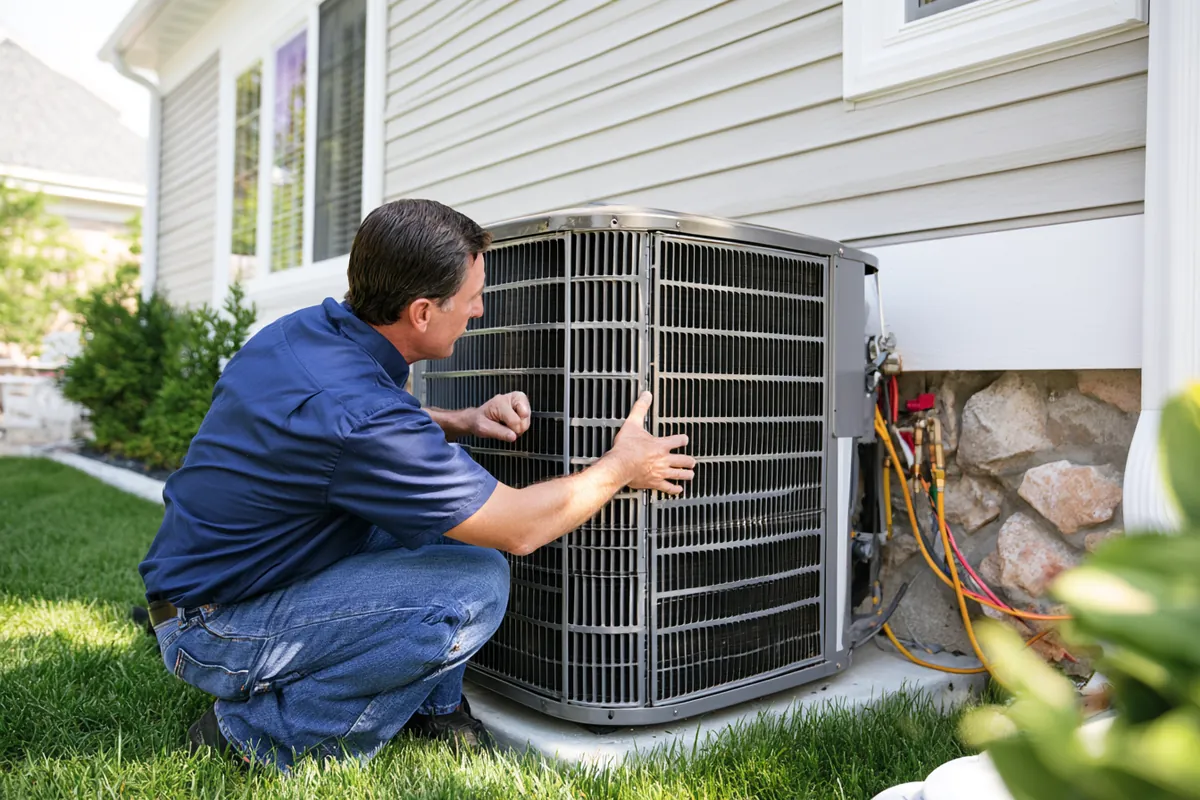
Estimated payments on a $3,000 loan
12 months
$283.68/mo
Estimate at 24% APR · total about $3,404.15
24 months
$158.61/mo
Estimate at 24% APR · total about $3,806.72
36 months
$117.70/mo
Estimate at 24% APR · total about $4,237.15
Estimates for illustration only, before any origination fee. Your APR, term and payment are set by the lender.
A $3,000 loan sits in the middle of what most online lenders handle: large enough to cover a real household repair or wipe out several small balances, yet modest enough to repay within one to three years. Through Willow Lake Loan, you can send one short request and find out whether lenders in the network present an offer for this exact amount.
The sections below explain who usually takes out a $3,000 loan, what a personal loan of this size can realistically pay for, estimated payments at longer terms, how lenders judge a mid-size personal loan request, and when a smaller personal loan would serve you better.
Who Typically Requests a $3,000 Loan
Borrowers who request a $3,000 loan tend to be working adults with regular wages who run into one large bill that savings cannot fully absorb, such as a failed cooling system, a plumbing emergency, or a stack of store-card balances.
Homeowners appear often at this level because household systems tend to fail in the $2,500 to $3,500 range once parts and labor are added. Renters borrow it too, frequently to merge high-rate revolving balances into a single fixed payment with a clear end date.
Lenders view a $3,000 personal loan as a moderate request. The sum is bigger than a small emergency advance, so most lenders expect documented income and a manageable existing debt load, yet it stays well inside the $500 to $5,000 range available through the Willow Lake Loan network.
Imagine Rosa, a dental hygienist who takes home about $4,200 a month. Her emergency fund holds $900, and her repair quote is $3,400. Instead of borrowing the whole quote, she plans to cover $400 herself and request a $3,000 loan for the remainder, which keeps her new monthly obligation lower. She sends that smaller personal loan request through Willow Lake Loan in one sitting.
Concrete Uses for a $3,000 Personal Loan
A $3,000 personal loan typically pays for one sizable household repair or a focused debt cleanup, and the strongest uses are the ones where you already hold a written quote or a current statement balance.
Central air part replacement plus labor
A failed compressor or condenser fan motor can run $1,800 to $3,000 once the part, refrigerant, and a technician's hours are added together. In a July heat wave, waiting for savings to rebuild is rarely realistic, especially with older relatives or small children at home. Ask the contractor for an itemized quote so your $3,000 loan request matches the actual invoice rather than a rough guess.
Kitchen plumbing repair
A slow leak under a kitchen sink can quietly rot the cabinet floor and the subfloor beneath it. Cutting out the damaged section, running new supply lines, and installing a replacement faucet and disposal can reach $2,500 to $3,000. Plumbers often want payment at completion, so lining up funds ahead of the job avoids a scramble. A personal loan funded before the plumber arrives lets you pay on the spot.
Consolidating three store cards
Retail cards frequently carry APRs near or above 30%. If you owe $1,100, $950, and $900 on three store accounts, a 3000 dollar loan at a lower fixed rate could replace three due dates with one. Consolidating with a personal loan only works if the new APR is genuinely lower and you stop adding charges to the cleared cards.
Replacing two major appliances at once
Refrigerators and washers sometimes fail within months of each other. Buying both, plus delivery and haul-away of the old units, can approach $3,000. Check whether the retailer offers a short promotional plan before you borrow, and compare its true cost against any personal loan offer.
Estimated Monthly Payments on a $3,000 Loan
Estimated payments on a $3,000 loan range from about $99.64 a month over 36 months at 12% APR to about $218.11 a month over 18 months at 35.99% APR, depending on the term and rate a lender actually offers.

| Estimated APR | 18-month payment (est.) | 24-month payment (est.) | 36-month payment (est.) | Interest over 36 months (est.) |
|---|---|---|---|---|
| 12% | $182.95 | $141.22 | $99.64 | $587.15 |
| 18% | $191.42 | $149.77 | $108.46 | $904.46 |
| 24% | $200.11 | $158.61 | $117.70 | $1,237.15 |
| 30% | $209.01 | $167.74 | $127.35 | $1,584.77 |
| 35.99% | $218.11 | $177.13 | $137.39 | $1,946.19 |
Every figure in the table is an estimate built on a standard amortized schedule with no fees added. Your actual APR, term length, and any origination charge are set by whichever lender reviews your personal loan request, and they depend on credit, income, and state rules.
Watch the trade-off at the long end. At 24% APR, stretching from 24 to 36 months lowers the estimated payment by about $40.91, from $158.61 to $117.70, but lifts total interest from about $806.72 to about $1,237.15. A shorter personal loan schedule costs more each month and noticeably less overall.
For contrast, a 12-month schedule at 18% APR is estimated at $275.04 a month with roughly $300.48 in interest. If your budget can hold that payment, the faster payoff on a $3,000 loan saves real money. The personal loan APR ranges by credit tier show how the market band of about 8% to 35.99% APR plays out across different borrower profiles.
How Lenders Evaluate a $3,000 Request
Lenders evaluating a $3,000 request focus mainly on whether your verified income can carry the new payment alongside existing debts, which they measure through your debt-to-income ratio, along with your credit history and recent account behavior.
Income verification is more common for a $3,000 loan than for very small personal loans. A lender may link to your bank account to read deposits, ask for recent pay stubs, or request tax returns if you are self-employed. Benefits, pensions, and regular part-time wages usually count when they can be documented.
Debt-to-income ratio, or DTI, divides what you owe each month on debts by what you earn before taxes. Picture Malik, who earns $4,000 a month before taxes and pays $1,150 in rent, $280 on a car, and $120 in card minimums. His DTI is about 39%. Adding a $3,000 loan at roughly $141.22 a month over 24 months would lift it to about 42%, which some lenders accept and others do not.
Many lenders prefer a DTI below roughly 36% to 40% once the new payment is included, though limits vary widely. If yours runs higher, a smaller personal loan or a longer term may improve the picture. The baseline eligibility requirements for loan requests list what most lenders in the market share. Willow Lake Loan does not calculate DTI itself; each lender in the network applies its own cutoff.
Documents and Conditions to Have Ready
Most lenders reviewing a 3000 dollar loan ask for a government-issued ID, proof of income, an active checking account in your name, and current contact details, and they may attach conditions before releasing funds.
- A valid driver's license, state ID card, or passport
- Your Social Security number or ITIN for identity and credit review
- Recent pay stubs, a benefits award letter, or bank statements showing regular deposits
- A checking account that accepts direct deposits and automatic debits
- Proof of address, such as a recent utility bill, if the lender requests it
Gathering these items before your Willow Lake Loan form goes out can shorten the back-and-forth with a lender later.
Conditions can include confirming employment by phone, verifying the bank account with a tiny test deposit, or enrolling in autopay. Some lenders trim the APR slightly for autopay. When the purpose of the personal loan is card consolidation, a lender may send part of the money straight to your card issuers rather than to you.
You generally need to be at least 18 (19 in a few states), a U.S. resident, and able to sign documents electronically. Meeting those basics does not mean approval; each lender applies its own personal loan underwriting.
How Your Credit Tier Shapes the Offer
Credit tier changes the APR, the term length, and sometimes the approved amount on a $3,000 loan, so two people asking for identical sums can see estimated monthly payments that differ by $35 or more.
Borrowers with strong credit, often scores in the 700s and up, may see personal loan offers near the low end of the market band. Using the plan figures, 12% APR over 24 months is estimated at $141.22 a month. A fair-credit borrower in the 600s might land closer to 24%, or about $158.61 a month across the same 24 months.
Applicants with limited or damaged credit may receive offers near 35.99% APR, estimated at $177.13 a month for 24 months, or they may be approved for less than a full $3,000 loan. A counteroffer of $2,000 or $2,500 is common when a lender likes your income but wants less exposure.
Your tier reflects more than a single score. Recent late payments, high card utilization, and accounts opened in the last few months all influence pricing. Paying a card down below 30% of its limit before you submit can sometimes nudge a personal loan offer in your favor.
Origination Fees and What Lands in Your Account
An origination fee is usually deducted from a $3,000 loan before funding, so a 5% fee means about $150 is withheld and roughly $2,850 reaches your bank while you still repay the full $3,000 plus interest.
Fees across the market commonly run from 0% to around 10% of personal loan principal, depending on the lender and state. On a $3,000 loan, a 10% charge would hold back $300, which could leave you short of a plumber's final invoice.
If you need $3,000 in hand and the lender charges 5%, you would have to borrow about $3,158 to net the full sum. Compare personal loan offers by APR, which folds the fee into the yearly cost, instead of by the interest rate alone.
Ask whether the fee comes out of the proceeds or gets added to the balance, and confirm in writing that no prepayment penalty applies. Most personal loans at this size allow early payoff without a charge, which lets you cut interest if a bonus or tax refund arrives.
Alternatives Worth Comparing First
Alternatives to a $3,000 loan include a contractor or retailer payment plan, a credit union personal loan, a 0% introductory card for strong credit, or using part of your savings and borrowing only the remaining gap.
- Contractor financing: many HVAC and plumbing companies offer promotional plans. Read deferred-interest terms carefully, because missing the promo deadline can trigger back-charged interest.
- Credit union loans: federal credit unions generally cap most personal loan rates at 18% APR, though you must qualify for membership first.
- Balance transfer card: for store-card consolidation, a 0% promo may beat any loan if you can clear the debt before the promo ends. Transfer fees often run 3% to 5%.
- Hardship programs: card issuers and utilities may reduce rates or spread payments if you call and explain your situation.
- Partial savings: covering even $500 yourself trims the request to $2,500 and the estimated 24-month payment at 24% APR to about $132.18.
If none of these options covers the whole bill, a personal loan can fill the remaining gap, and Willow Lake Loan can show you whether a lender in its network is willing to offer it.
Requesting a $3,000 Loan Through Willow Lake Loan
Willow Lake Loan lets you request a $3,000 loan with one short online form; the service shares your details with lenders in its network, and any lender interested in working with you may present an offer.
- Select $3,000 as your personal loan amount and pick a purpose, such as home repair or consolidating cards.
- Enter your income, employment, and basic contact information.
- Review any offer that appears, checking the APR, term, fee, and estimated monthly payment.
- Accept only when the numbers fit your budget; declining costs nothing.
Most borrowers finish the Willow Lake Loan form for a mid-size amount in roughly five minutes.
Willow Lake Loan works as a matching service rather than a lender; rates, terms, and approval decisions belong to the lenders themselves. There is no charge for the form, although participating lenders may pay the service a fee. Sending your details usually leaves your credit score untouched, though a lender might pull a hard inquiry once you decide to proceed with its offer.
After approval and e-signing, money from a $3,000 loan often reaches checking within a business day or so, with exact timing set by the lender and your own bank.
When a Smaller Amount Fits Better
A smaller amount fits better when your real quote comes in under $3,000, when your DTI is already near a lender's limit, or when the extra monthly payment would squeeze rent, groceries, or savings contributions.
Compare the estimates at 24% APR over 24 months: about $158.61 a month for a $3,000 loan versus about $105.74 for a $2,000 personal loan. That $1,000 difference adds roughly $52.87 a month and about $268.91 in interest, money that buys nothing if you did not need it.
If your plumbing estimate came back at $2,100, a smaller $2,000 loan request plus a little savings may be the better match. If the job grew past the first quote, the guide to borrowing $4,000 explains what changes one step up.
Borrow only what you can repay comfortably, whatever personal loan amount you choose. A payment that strains your monthly budget can turn one emergency into two.
Frequently asked questions
Can I get a $3,000 loan with a credit score under 600?
Some lenders in the market work with scores below 600, but offers on a $3,000 loan are often priced near the top of the range, around 35.99% APR, or reduced to a smaller amount. Steady documented income and a lower DTI improve your odds. Approval is never certain, and each lender decides independently after reviewing your full profile.
How long does it usually take to repay a $3,000 loan?
Most personal loan offers for this amount run between 12 and 36 months. A 12-month schedule at 18% APR is estimated at $275.04 a month, while 36 months at the same rate drops to about $108.46 but costs far more interest. Choose the shortest term whose payment still leaves breathing room in your budget.
Is it possible to have my HVAC contractor or plumber paid by the lender?
Personal loan funds are normally deposited into your checking account, and you pay the contractor yourself. Direct payment to third parties is more typical for card consolidation, where some lenders send money straight to your issuers. If you want the contractor paid on completion, keep the funds in your account until the work passes your inspection.
Is a 3000 dollar loan better than a balance transfer card for store-card debt?
A balance transfer card with a 0% promo can be cheaper if your credit qualifies and you can clear the full balance before the promo expires. A fixed-rate personal loan offers a set payoff date and steady payment, which helps if you tend to carry balances. Compare the transfer fee against the loan's estimated APR and total interest.